
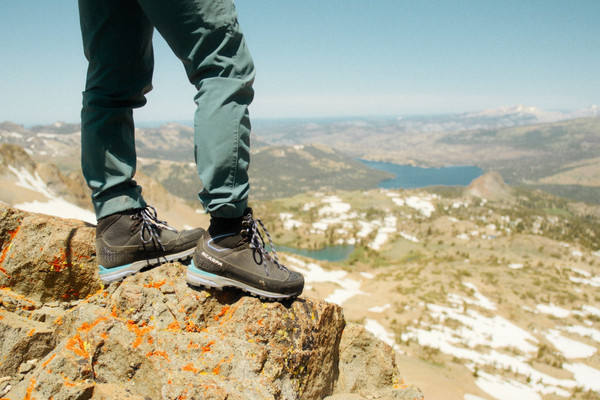
Buying Guide: Best Hiking Boots for Spring/Summer 2026
Posted by Derek Newman on 27th May 2026
Looking for the best hiking boots for spring and summer 2026? Winter didn’t stay long this year, and right now the Wasatch is drying out faster than anyone expected. Dirt is showing at mid-elevation, the Uinta trailheads are clearing up, and if you were hoping to get a jump on the season, this is your window. Whether you’re day-hiking the Bonneville Shoreline, loading up for a multi-night pack into the High Uintas Wilderness, or eyeing technical terrain in Little Cottonwood Canyon, the right boot makes a bigger difference than most people realize, especially early in the season when trails are still soft, creek crossings are running high, and conditions can shift 3,000 feet of elevation in a single day.
The best hiking boots for spring and summer hiking depend on your terrain and objectives. For most hikers, the SCARPA Rush TRK GTX delivers the best all-around combination of waterproofing, durability, and load-carrying ability. For fast-and-light days, the Salewa Pedroc Light Mid PTX saves significant weight without sacrificing support. Technical terrain and canyon approaches call for more specialized options. Here is what we’re recommending for Spring/Summer 2026.
Best All-Around Boot: SCARPA Rush TRK GTX
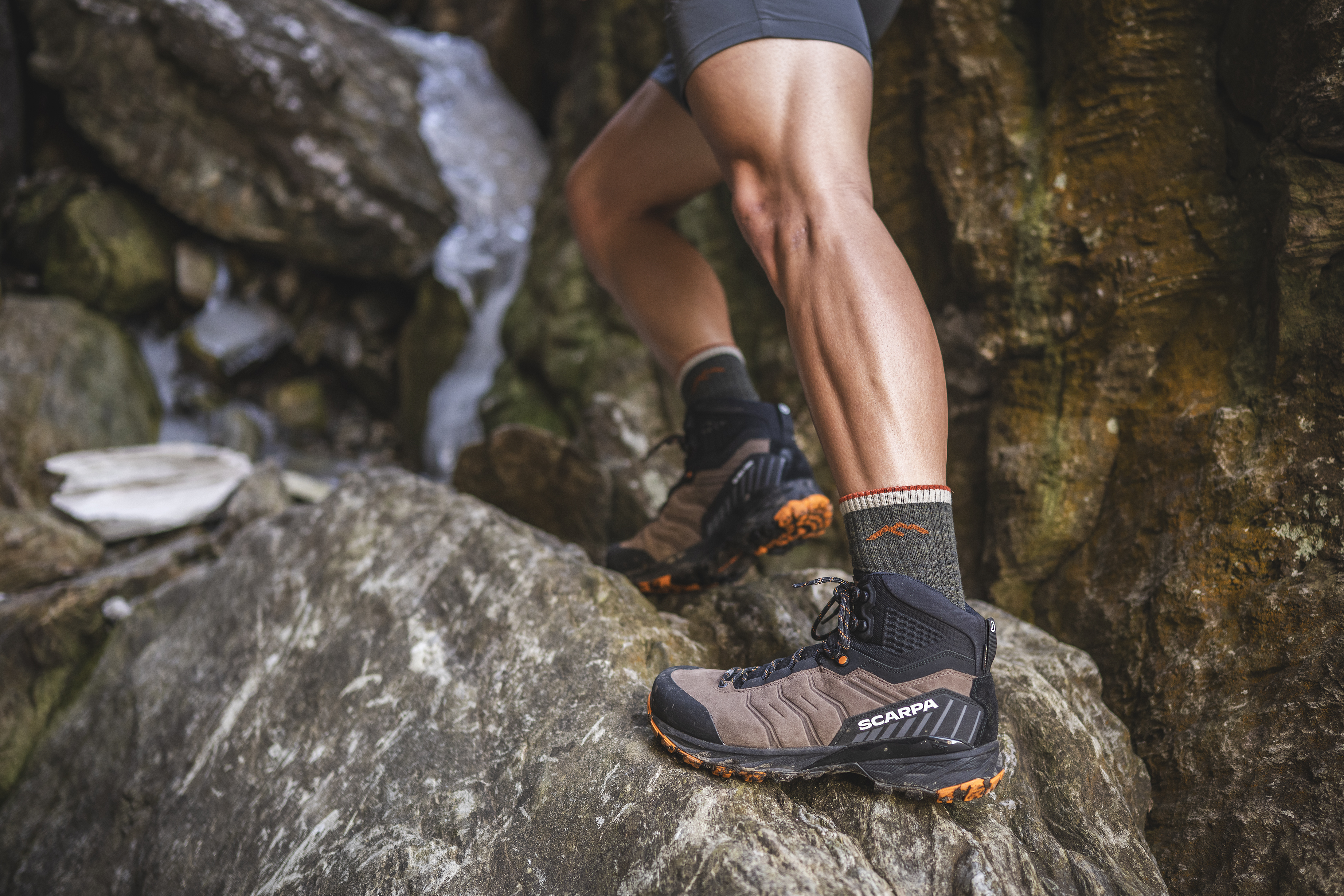
If you’re going to own one pair of hiking boots and they need to work everywhere—packed dirt, loose scree, canyon approaches, loaded multi-day carries—the SCARPA Rush TRK GTX is the answer. SCARPA’s RUSH Frame technology distributes load across the full footbed and keeps heel-drag exhaustion at bay over big days, while GORE-TEX waterproofing and a Perwanger leather upper handle whatever the trail throws at you. The Vibram Drumlin outsole grips confidently on wet and loose terrain. It’s the boot you bring when the weather is uncertain, the terrain is mixed, and you need something that won’t let you down from mile one to mile fifty.
Waterproofing: GORE-TEX | Outsole: Vibram Drumlin | Upper: Perwanger leather | Best for: Multi-day backpacking, mixed terrain, loaded carries
SCARPA Men’s Rush Trk GTX


SCARPA Women’s Rush Trk GTX

Best Lightweight Boot: Salewa Pedroc Light Mid PTX
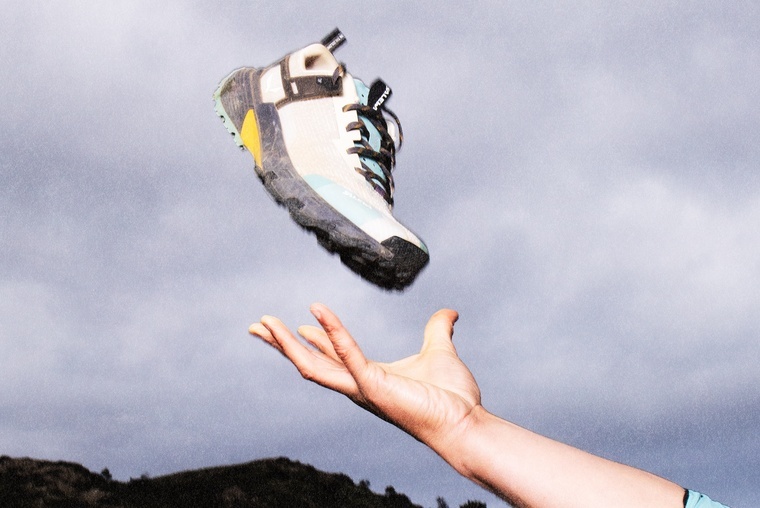
Not every day calls for a bomber leather boot. Sometimes you just want to move. The Salewa Pedroc Light Mid PTX pulls significant weight out of a traditional mid hiker without sacrificing structure. The Pomoca outsole bites hard on wet grass and loose talus, the Pertex Shield membrane handles the afternoon thunderstorms that show up unannounced at 11,000 feet in July, and the knit-and-mesh upper breathes well once the sun climbs. The mid-height cuff gives your ankle enough support for technical terrain without locking you into a rigid platform. For big days on the Wasatch Crest Trail or fast-and-light objectives in the High Uintas, this is the boot worth every ounce. Or rather, every ounce you’re not carrying.
Waterproofing: Pertex Shield | Outsole: Pomoca | Upper: Knit-and-mesh | Best for: Fast-and-light day hikes, high-mileage ridgeline routes
Salewa Men’s Pedroc Light Mid PTX

Salewa Women’s Pedroc Light PTX Shoe

Best Agile Boot: La Sportiva Ultra Raptor 3 Mid GTX

Some terrain doesn’t ask you to hike. It asks you to move fast. Scrambling over quartzite blocks above Albion Basin, picking through boulder fields on the approach to a Uinta summit, charging down a steep switchback where a flat-footed stomp ends badly. La Sportiva updated the Ultra Raptor 3 Mid GTX with a new Idrogrip wet rubber compound—better friction on wet rock, better bite on loose trail. The FriXion XF upper is protective without being stiff, the GORE-TEX Extended Comfort lining keeps feet dry without cooking them, and the STB Control System locks the heel in place on aggressive downhills so you’re not floating around in the boot when the grade kicks up. The boot for people who hike like a trail runner.
Waterproofing: GORE-TEX Extended Comfort | Outsole: Idrogrip wet rubber | Upper: FriXion XF | Best for: Technical scrambling, dynamic terrain, aggressive downhills
La Sportiva Men’s Ultra Raptor 3 Mid GTX

La Sportiva Women’s Ultra Raptor 3 Mid GTX

Best Waterproof Boot: Asolo Fugitive GTX
May in the Uintas means one thing: wet. Trail crossings where the footbridge is still buried, meadows that don’t show as wetlands on the map, snow you didn’t expect at 9,500 feet. The Asolo Fugitive GTX is the boot that won’t flinch. The full-length GORE-TEX lining keeps moisture out from top to bottom, the suede-and-nylon upper adds a solid exterior barrier, and the dual-density EVA/PU midsole cushions loaded carries without sacrificing stability on uneven ground. It’s a no-drama boot—you won’t be thinking about your feet. You’ll be thinking about the view from the ridge.
Waterproofing: GORE-TEX full-length lining | Midsole: Dual-density EVA/PU | Upper: Suede and nylon | Best for: Early-season wet conditions, loaded carries, soggy trail crossings
Asolo Men’s Fugitive GTX

Best Water-Ready Boot: Astral TR1 Merge 2.0
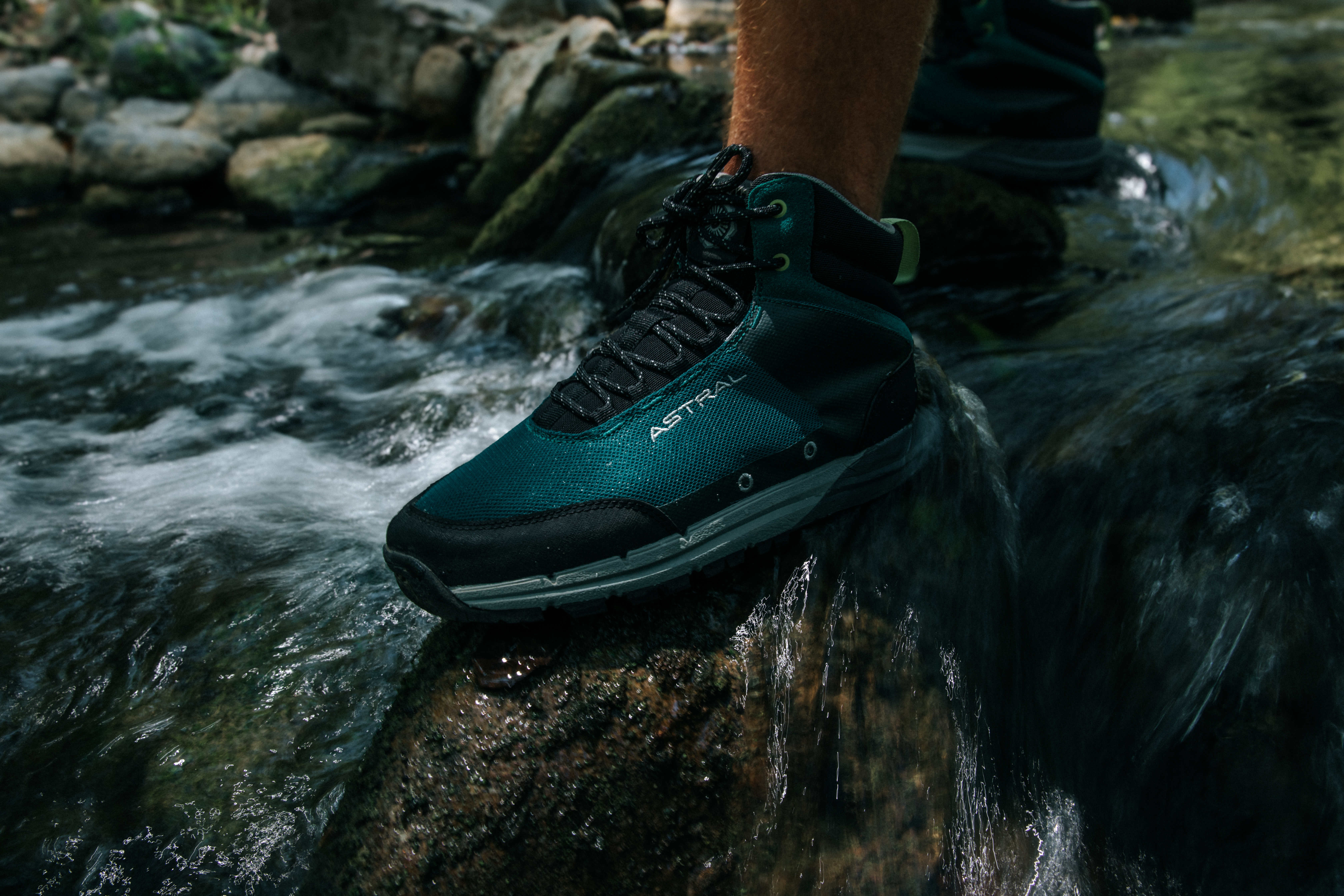
There’s a different kind of wet—not the caught-in-a-rainstorm wet that a GORE-TEX boot handles, but the deliberate, unavoidable wet of canyon hiking and river crossings where you’re going in regardless of what your boots prefer. That’s where waterproof membranes become a liability. The TR1 Merge 2.0 is intentionally non-waterproof, built to drain fast and dry faster. The upper won’t waterlog over hours of wet terrain, and the G-Rubber outsole is the same compound Astral uses on their legendary water shoes for gripping submerged rocks the way standard lug soles simply don’t. For canyoneers working routes in Zion or the San Rafael Swell, this is the smarter call.
Waterproofing: None (intentional fast-drain design) | Outsole: G-Rubber | Best for: Canyon hiking, deliberate water crossings, Zion-style routes
Astral TR1 Merge 2.0

Best Leather Boot: SCARPA Terra GTX
Full-grain leather boots have a reputation for being stiff and heavy, but the SCARPA Terra GTX makes the case for why leather is still worth it. The upper molds to your foot over time, resists abrasion on rocky terrain far better than synthetics, and pairs with a GORE-TEX Extended Comfort lining that keeps water out without trapping heat. The dual-density EVA midsole absorbs trail shock without going soft, the outsole grips confidently on mixed Utah alpine surfaces, and the heel counter stays firm without punishing you on long descents. This is the boot that gets better the more you use it—and one you’ll still be reaching for in five years. Available in Men’s and Women’s.
Waterproofing: GORE-TEX Extended Comfort | Midsole: Dual-density EVA | Upper: Full-grain leather | Best for: Mixed alpine terrain, long descents, durability-focused hikers
SCARPA Men’s Terra GTX

Best Mountaineering Boot: SCARPA Zodiac Tech LT GTX
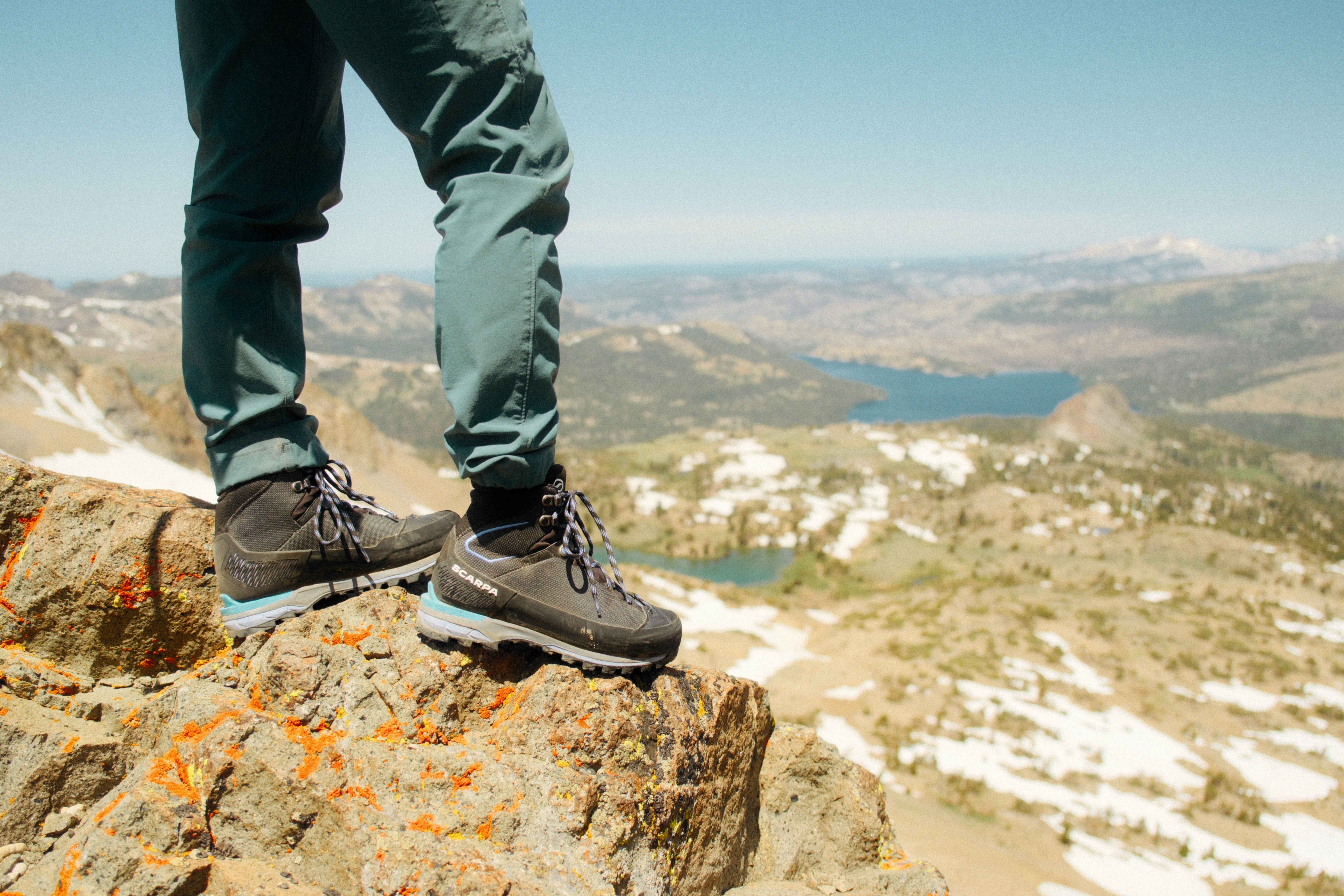
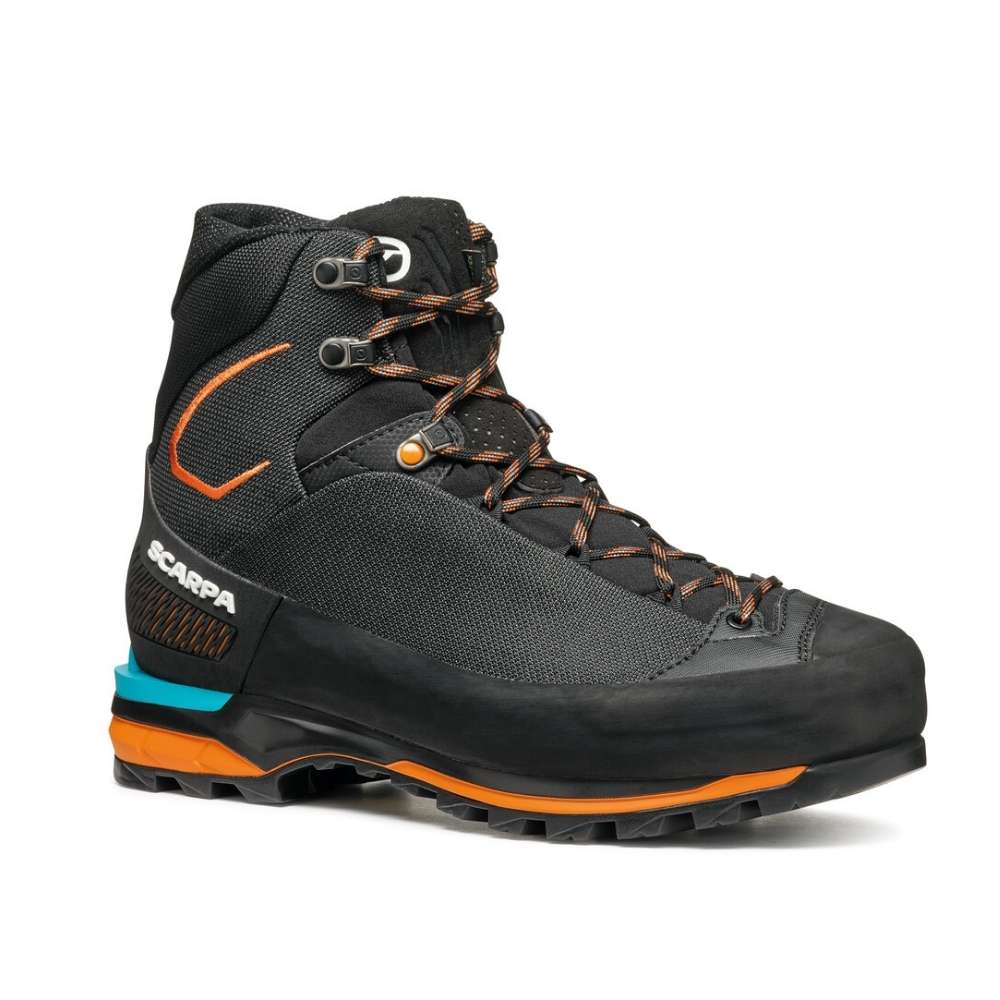
At some point the trail ends and the terrain gets serious. The SCARPA Zodiac Tech LT GTX sits at the top of the technical hiking-to-mountaineering spectrum. It's capable enough for crampons, stiff enough for front-pointing on moderate alpine snow, and light enough that you’re not paying a weight penalty for the capability. The C1 crampon-compatible sole accepts technical crampons for mixed snow and ice objectives, GORE-TEX Pro handles sustained high-output use in sustained bad weather, and the Vibram Mulaz outsole grips on everything from granite slabs to frozen ground. If your spring plans include technical routes in Big Cottonwood Canyon or Utah’s 11,000-foot peaks while they’re still in alpine condition, this is where the list ends.
Waterproofing: GORE-TEX Pro | Outsole: Vibram Mulaz | Crampon compatible: Yes (C1) | Best for: Technical alpine routes, moderate mountaineering, mixed snow and rock
SCARPA Men’s Zodiac Tech LT GTX
SCARPA Women’s Zodiac Tech LT GTX

Finding Your Boot
Use this quick-reference table to match your spring and summer hiking objectives to the right boot.
| Boot | Best For | Waterproofing | Terrain Type |
|---|---|---|---|
| SCARPA Rush TRK GTX | All-around, multi-day carries | GORE-TEX | Mixed, packed dirt, scree |
| Salewa Pedroc Light Mid PTX | Fast-and-light day hikes | Pertex Shield | Ridgeline, talus, high-mileage |
| La Sportiva Ultra Raptor 3 Mid GTX | Technical scrambling, agile movement | GORE-TEX Extended Comfort | Boulders, steep switchbacks, wet rock |
| Asolo Fugitive GTX | Early-season wet conditions | GORE-TEX full-length | Soggy trails, spring snowmelt, meadows |
| Astral TR1 Merge 2.0 | Canyon hiking, river crossings | None (fast-drain design) | Canyons, submerged rock, Zion-style |
| SCARPA Terra GTX | Wet alpine terrain, long descents | GORE-TEX Extended Comfort | Rocky alpine, mixed Utah surfaces |
| SCARPA Zodiac Tech LT GTX | Technical mountaineering, crampon use | GORE-TEX Pro | Alpine, mixed snow and rock, 11,000+ ft |
Not sure which boot fits your objectives? Read our guide to approach shoes vs. hiking shoes to understand where boots end and lighter footwear begins, or reach out to the Campman team directly—we’re happy to help.
Frequently Asked Questions
What are the best hiking boots for spring and summer 2026?
The best hiking boots for spring and summer 2026 depend on your terrain. For most hikers, the SCARPA Rush TRK GTX delivers the best all-around combination of waterproofing, durability, and load-carrying ability. For fast-and-light days, the Salewa Pedroc Light Mid PTX saves significant weight without sacrificing support. Technical terrain and canyon approaches call for more specialized options like the La Sportiva Ultra Raptor 3 Mid GTX and Astral TR1 Merge 2.0 respectively. For mountaineering objectives, the SCARPA Zodiac Tech LT GTX leads the list.
Do I need waterproof hiking boots for summer hiking?
In spring and early summer in the Mountain West, yes. Snowmelt keeps creek crossings running high and trails wet at elevation well into July. A GORE-TEX boot handles this well. That said, for canyon hikes with deliberate water crossings, a non-waterproof boot like the Astral TR1 Merge 2.0 is actually the smarter choice—it drains and dries faster than a sealed membrane boot that fills with water and stays wet.
What is the difference between hiking boots and hiking shoes?
Hiking boots have a mid- or high-cut ankle collar for support on uneven terrain, under heavy loads, and on technical routes. Hiking shoes have a low-cut design offering more freedom of movement and lighter weight but less ankle support. Boots are the better choice for backpacking, rocky scrambles, and early-season conditions. Shoes work well for well-maintained day hikes on moderate terrain. If you are unsure, our guide to approach shoes vs. hiking shoes covers the differences in detail.
Are GORE-TEX hiking boots worth it?
For most three-season hiking in the Mountain West, yes. GORE-TEX keeps your feet dry through rain, snowmelt, wet grass, and shallow stream crossings without adding significant weight or bulk. The trade-off is breathability: GORE-TEX boots run warmer than non-waterproof options in hot, dry conditions. For spring hiking and anything involving uncertain weather or wet terrain, GORE-TEX is worth it.
What hiking boots are best for canyon hiking?
For canyon hiking with deliberate water crossings, a non-waterproof boot that drains fast and dries quickly is the right choice. The Astral TR1 Merge 2.0 is purpose-built for this use case, with a fast-draining upper and G-Rubber outsole that grips submerged rocks the way standard lug soles do not. Waterproof boots are a liability in canyons because they fill with water and stay wet for hours. The TR1 Merge 2.0 is the top pick for routes in Zion, the San Rafael Swell, and similar canyon terrain.
How should hiking boots fit?
Hiking boots should fit snugly through the heel and midfoot with about a thumb-width of space in front of your toes. Your heel should not lift when walking uphill, and your toes should not slam into the front on steep descents. Always size hiking boots in the afternoon when your feet are slightly swollen, and try them on with the socks you plan to hike in. Most hikers size up a half size from their street shoe. If you are unsure, reach out to the Campman team for a fit recommendation.
About the Author
 Derek Newman
Born in the Wasatch, Derek has had an affinity for mountain life since day one. He was on skis the year he learned to walk, and as a high school graduation present he gifted himself rock climbing lessons. Nearly two decades later, Derek spends most of his time climbing up and/or skiing down most of the mountains around Salt Lake City, and he's traveled around the world multiple times for the sole purpose of peak exploration. When he isn't a man about camp, he's working in Campman's content marketing crew writing up blogs about backcountry skiing or rock climbing as well as describing products that he's used personally. He's climbed in most climbing shoes, toured on most backcountry skis, and ridden the resorts on skis, snowboards, and even some evac sleds.
Share on: